Anodic Film Formation in Oxalic Acid on AlMn0.5Mg0.5 Alloy

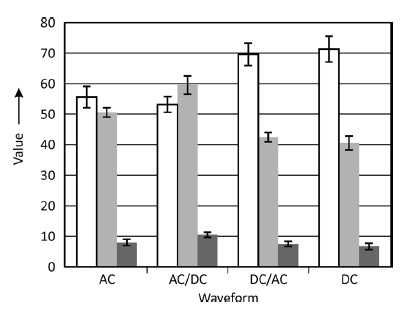
The microstructure of oxalic-acid-anodized layers on AlMn0.5Mg0.5 alloy is compared to such layers on aluminum. Differences originate from four types of precipitates occurring in the alloy, forming inclusions in the layers, roughening surface and interface, and modifying typical pore structures of anodized aluminum oxides. A characteristic feature of this modification is the appearance of transverse channels in pore walls. Nanoscaled precipitates are suggested as their origin. Correlation to functional properties such as microhardness and electrical isolation behavior is discussed.


Environmental Issues of Chromium(VI) Compounds

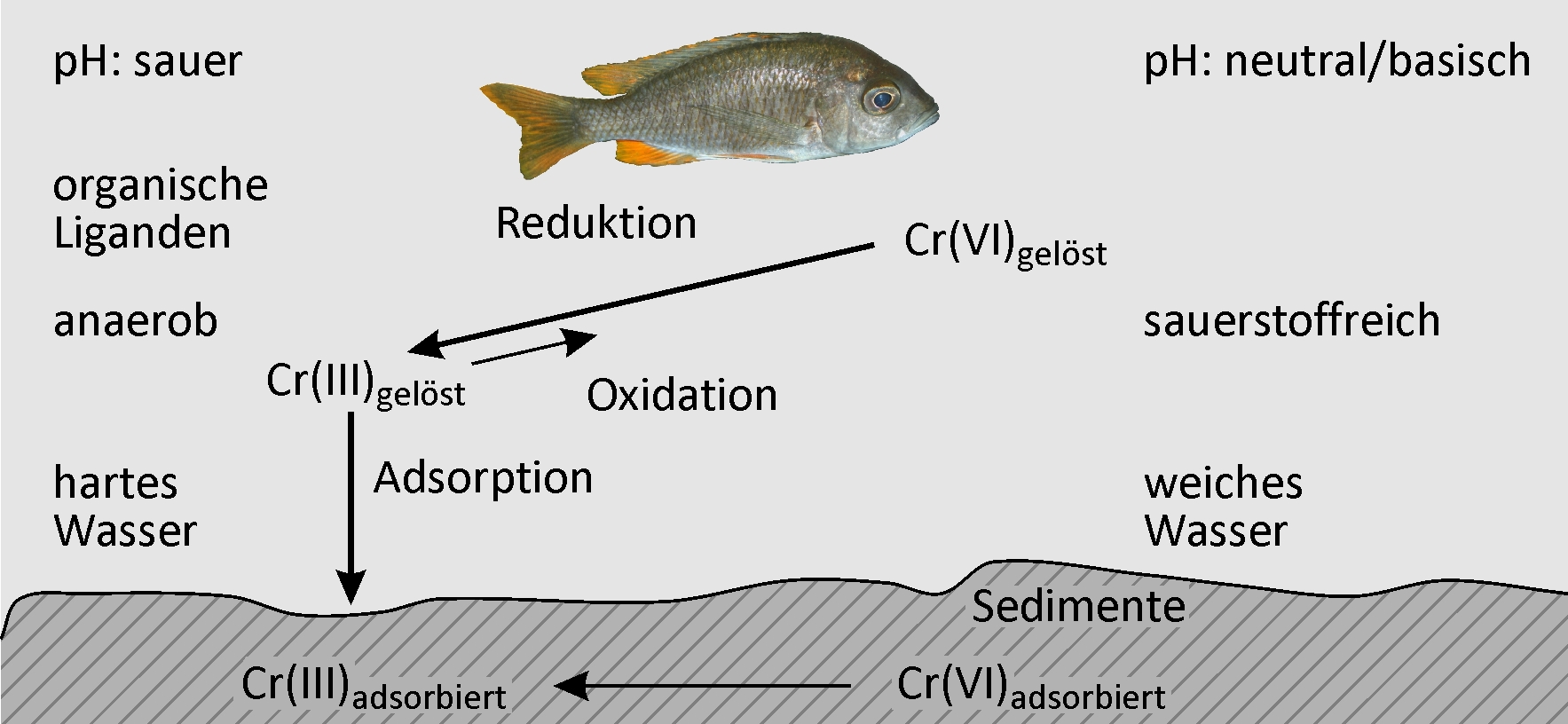
This article focuses on ecotoxicological properties of chromium(VI) compounds, their behavior in the environment, as well as consequences for safe handling such compounds. In natural environments, chromium is usually part of complex compounds. Therefore, higher concentrations of biologically available chromium compounds are mostly due to human activity. Trivalent and hexavalent chromium remain stable in natural environments. Both oxidation states are inter-convertible via redox reactions. As studies on organisms at all levels of the food chain show, hexavalent chromium is characterized by relatively high acute and chronic aquatic toxicity. From a regulatory point of view, this implies that additional risk management measures are necessary in order to reduce the input of chromium(VI) compounds into the environment as far as possible. At the same time, the properties of the substance call for an intensive search for substitute materials and processes that guarantee the functionality needed but cause less problems for human health and the environment. Further details are available in European Risk Assessment Report 53 [1].


Properties of Gold Composites with Nanostructured Carbon-based Materials

Results of electrocodeposition of gold matrix composite coatings with carbon-based materials are reported, namely ultradispersed diamonds (UDD) and multiwalled carbon nanotubes (MWCNT). Pure gold and gold composite coatings were prepared from a gold sulphite electrolyte with bath loads from 5 to 20 g/l (UDD bath) and from 0.1 to 5 g/l (MWCNT bath). The resulting composites are characterized in terms of carbon content, particle distribution, and their bonding to the matrix, surface morphology, and the influence of particle loading in the electrolyte on matrix microstructure. Vickers hardness, friction, and wear behavior were investigated and are discussed in terms of microstructure characterization. Some notable improvements in the performance of the composites were observed with regard to application as sliding contacts.


Electroplating of Nickel in Grooves Under the Influence of Low and Medium Frequency Ultrasound

The effect of ultrasonics on filling properties has been studied by Ni electroplating from a sulphamate electrolyte in high aspect ratio grooves. Experiments were carried out with two different modes of ultrasound: a) 25 kHz ultrasound with an effect of 225 W directed perpendicular to the substrate surface; b) ultrasonic standing waves of 100 kHz and 400 kHz parallel to the substrate surface. It was found that both methods improve filling in grooves that are between 0.35 and 1 mm wide with aspect ratios between 0.6 and 3, compared to electroplating with conventional agitation. Under the investigated conditions, the 400 kHz standing wave parallel to the surface was most efficient to improve filling of grooves.


Strontium-Substituted Hydroxyapatite Coatings on Titanium by Electrodeposition Technique

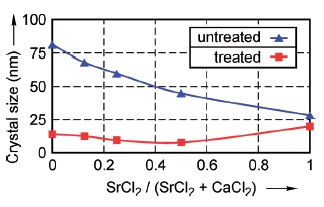
For the first time, strontium hydrogen phosphate (SrHPO4) was electrocrystallized on titanium substrate by means of electrochemical deposition technique, and converted to strontium hydroxyapatite (Sr10(PO4)6(OH)2) to improve implant adhesion and bone mineralization. Brushite (calcium phosphate dihydrate CaHPO4·2H2O) and strontium hydrogen phosphate were co-electrocrystallized on titanium substrate. With increasing SrCl2 and decreasing CaCl2 in the solution, Sr concentration in the coating was increased. Calcium substitution by strontium ranged from 0 to 100 atomic percent, thus having significant effect on layer thickness, morphology, and composition. Layers containing brushite and strontium hydrogen phosphate were converted to calcium hydroxyapatite and strontium hydroxyapatite. Strontium hydroxyapatite was formed in the case of 100 percent SrCl2 substituting CaCl2. Surface morphology, chemical composition, and phase identification of the coatings were studied by scanning electron microscopy combined with energy dispersive spectrometry (SEM-EDXS) and by X-ray diffractometry (XRD). Effects of the varying Sr substitution on the microstructure and properties are discussed.