Oxide Films on Sintered Tantalum for Electrolytic Capacitors

1. Introduction

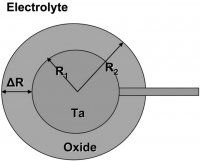
Electrolytic capacitors are characterized by the phase sequence electronic conductor / dielectric medium / electrolyte where the electronic conductor is a metal (typically Al or Ta) or an oxide (NbO) and the dielectric medium is an insulating oxide film (Al2O3, Ta2O5, SiO2, and Nb2O5). The electrolyte is a viscous or solid. Electrolytes are usually defined as ionic conductors, but for electrolytic capacitors the electronic conductivity is predominant.


Choline chloride-Ethylene glycol mixture as electrolyte for nano crystalline Nickel electrodeposits

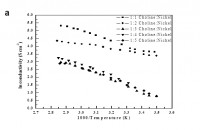
Fig. 1a: Comparison of conductivity of Ni(II) chloride dissolved in Ethaline complex

Nickel plating was carried out in stable Nickel ion based deep eutectic solvent (DES). The DES electrolyte stability and possible structure were explained by using Fourier Transform Infrared spectroscopy (FTIR) and Temperature Modulated Differential Scanning Calorimetry (TMDSC) techniques. The conductivity and electrochemical studies for choline based eutectic solvents were analyzed by conductivity cell and electrochemical impedance spectroscopy respectively. Higher current efficiency, thickness and hardness of Nickel were obtained by Pulse current electrodeposition when compared with Direct current electrodeposition. Crystallographic orientation and structural morphology were studied by X-ray diffraction (XRD) and Atomic Force Microscopy (AFM) respectively. Coated Nickel plate’s corrosion resistance and porosity properties were checked using potentiodynamic polarization and electrochemical impedance spectroscopy.


Evaluation of Hydrogen Embrittlement Value Due to the Electroplating of Steel Springs

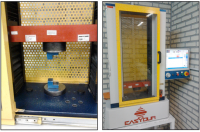
Fig. 3: Tensioning device used in this study.

Electroplating is a conventional process for spiral springs coating. One of the major problems in this process is considered to be the undesirable reaction leading to hydrogen embrittlement. Taking into account the application of springs in dynamic conditions, any ductile reduction may cause sudden and quick fracture. Unfortunately, hydrogen embrittlement in steel springs will not come along with any special signs. In addition, evaluation of hydrogen penetration and its consequent embrittlement requires very complex laboratory works, and is time consuming with little repetition due to its being affected by surface conditions as well as steel springs variations.


Electrochemical deposition and characterization of nanocrystalline Fe-Ni coatings

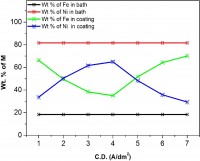
Fig.1: Variation of metal contents in the deposit with applied c.d.

Nanocrystalline Fe-Ni coatings were electrodeposited on mild steel (MS) panels at different current densities (c.d.) from an acid sulphate electrolyte. The operating parameters were optimized for best appearance and performance of the coatings. Different techniques like Field Emission Gun Scanning Electron Microscopy (FESEM), Energy Dispersive X-ray Analysis (EDXA), X-Ray Diffraction, potentiodynamic polarization scan and Electrochemical Impedance Spectroscopy (EIS) were employed to characterize the electrodeposited thin films. The electrodeposition process was found to be anomalous with 35% to 70% Fe, depending on the current densities (c.d.) employed for deposition. The properties of all coatings were found to show close dependency with c.d., phase structure and composition of the alloys. Corrosion behaviors were studied in 5% HCl and 5% KOH medium and corrosion parameters were reported. Experimental results are discussed by relating the composition, phase structure and grain size with corrosion performance of the coatings in both acid and alkaline medium.


    

Realisation of regularly faceted three-dimensional metallic mesocrystals by electrodeposition

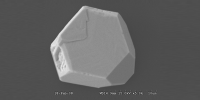
Electrodeposition has recently been shown to successfully create three dimensional micro- or nanostructures. Here we demonstrate that highly faceted metallic architectures are readily achieved by appropriate electrodeposition conditions. Three dimensional silver and copper mes-ocrystals with different shapes and size are potentiostatically electrodeposited on highly oriented pyrolytic graphite (HOPG) from simple sulfate and nitrate baths, respectively. The electrodeposition potential plays the most important role in determining the shape and size of mesocrystals. For silver mesocrystals, individual crystals with a range of shapes and sizes are observed which are not influenced by steps in the HOPG substrate. However, when copper is electrodeposited at one distinct potential it tends to form either wires on step edges or particles on terraces. Upon application of a dual pulse potential technique, well defined highly faceted copper mesocrystals are produced.