
Toxicity Study of a Nanoparticle Containing Passivate Layer

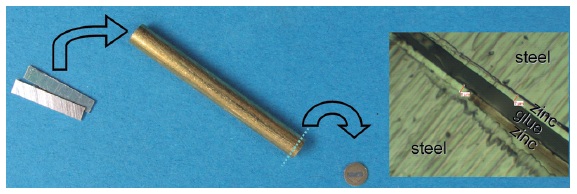
Fig. 1: Preparation of a sample for the TEM-cross section...

The authors report on the cell toxicity study of a nanoparticle containing chromium(III) passivation. The toxicity of abrasion from zinc plated and nano-passivated screws was tested with human A549 cells. As a reference system we used the abrasion from zinc plated and thick layer passivated screws. The tests showed no toxic potential of the nanoparticle-containing passivation layer, as can be seen by the normal growing behavior of the cells in presence of the abrasion.


    

Microstructure and Wear-Resistance of APS Alumina on Steel

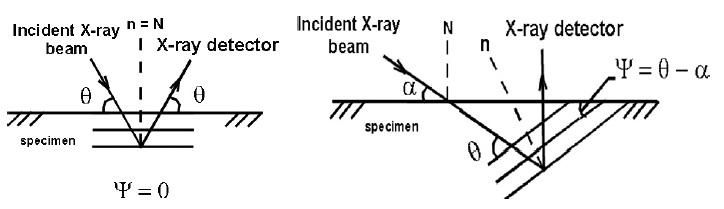
Fig. 1: Schematic of the symmetric B-B (a) and GIABD (b) geometries

Phase composition and parameters of micro-structure and properties in plasma-sprayed alumina coatings on steel as a function of the substrate temperature (in the range 200 – 400 °C) and coating thickness have been analysed. It has been found that increasing the temperature of the substrate and the coating thickness from 90 to 500 μm leads to the change of the phase composition and residual macrostresses. In all the investigated coatings the predominating is γ-Al2O3 phase although some α-Al2O3 and amorphous alumina have been also formed. At higher substrate temperature and higher coating thickness a lower amount of the amorphous phase and a higher amount of the α-Al2O3 have been formed. In all the investigated coatings tensile residual macro-stresses parallel to the surface have been fixed. Their value is minimal in the thicker (500 μm) coating which together with the observed in this deposit minimal share of the amorphous phase and maximal contribution of the α-Al2O3 is in a good agreement with its maximal wear-resistance.