

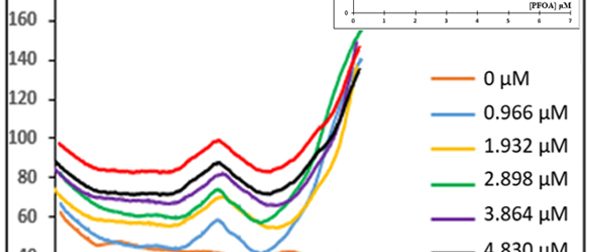
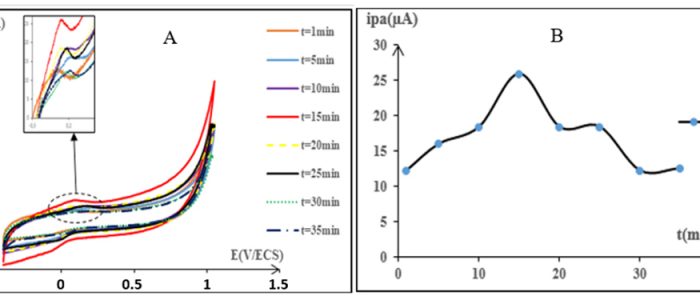
Electrochemical measurements performed using cyclic voltammetry and square wave voltammetry revealed significantly enhanced oxidation signals compared to the unmodified electrode. The modified electrode exhibited a detection limit of 0.49×10⁻⁶ mol⋅L−1, along with good stability and reproducibility.
These results demonstrate that Agnéby clay is an effective, low-cost modifier for the development of high-performance electrochemical sensors, offering promising applications for environmental monitoring of perfluorinated compounds.

